
Measuring electrophoretic mobility is a critical process in various scientific fields. It involves techniques that allow for the separation of charged species under an electric field Zetasizer. The precision of these measurements is influenced by multiple factors, including sample preparation and environmental conditions. Understanding the nuances of these techniques and their associated best practices is essential for obtaining reliable data. This discussion will explore the methods and considerations that underpin effective electrophoretic mobility measurements.
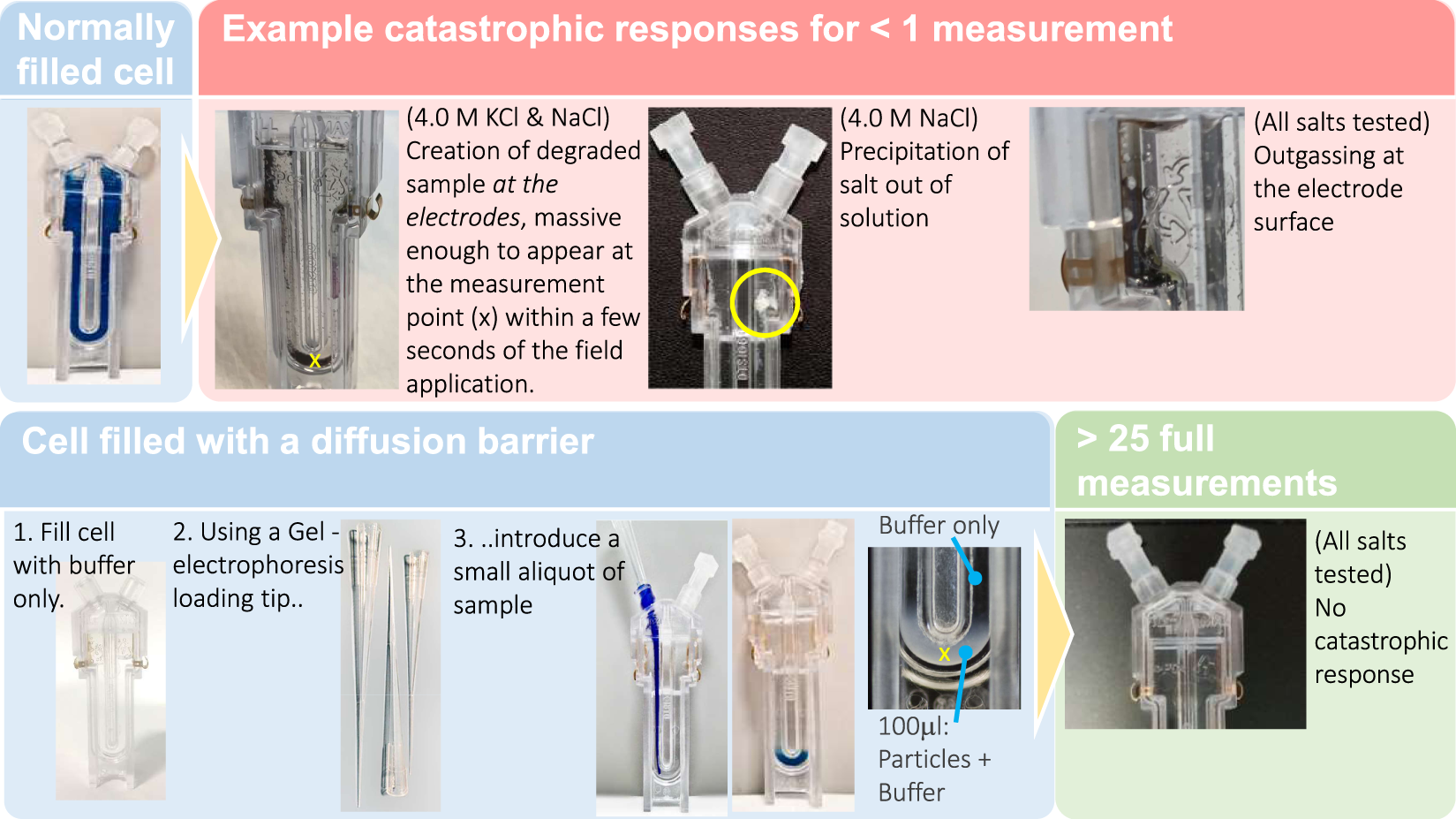
Understanding Electrophoretic Mobility and Its Importance
Electrophoretic mobility, an essential parameter in the study of charged particles in electric fields, quantifies the velocity of particles relative to the applied electric field strength.
Understanding this concept is grounded in electrophoretic principles, which dictate how particles migrate based on their charge and the surrounding medium’s characteristics Lab Alliance. The degree of charge separation during electrophoresis directly influences the mobility of particles, impacting their distribution in analytical applications.
Factors such as particle size, shape, and charge density are critical in determining electrophoretic mobility. This metric is crucial for optimizing separation processes in various fields, including biochemistry and materials science, where accurate characterization of charged entities is paramount.
Techniques for Measuring Electrophoretic Mobility
Measuring electrophoretic mobility requires employing various techniques that accurately assess the movement of charged particles in an electric field.
One prominent method is capillary electrophoresis, which utilizes narrow capillaries to separate charged species based on their mobility. This technique allows for high-resolution analysis and is particularly effective for small sample volumes.
Another advanced method involves laser induced fluorescence, where charged particles are tagged with fluorescent labels. When exposed to a laser, these labels emit light, enabling precise detection and quantification of the particles’ movement.
The combination of capillary electrophoresis and laser induced fluorescence enhances the sensitivity and specificity of measurements, providing researchers with valuable insights into the behavior of charged particles within electric fields.
Factors Affecting Electrophoretic Mobility Measurements
Although various techniques exist for evaluating charged particle movement, several factors can greatly influence the accuracy and reliability of electrophoretic mobility measurements.
Ionic strength plays an essential role, as it affects the double layer surrounding particles, thereby altering their mobility. Additionally, particle size directly correlates with mobility, where smaller particles typically exhibit higher velocities under an electric field.
Temperature variations also impact measurements; increased temperatures generally enhance particle movement. Moreover, pH levels can modify the surface charge of particles, influencing their electrophoretic behavior.
Each of these factors must be meticulously controlled and considered to guarantee that electrophoretic mobility measurements are both precise and reproducible, as they are crucial for interpreting the underlying physical and chemical phenomena.

Best Practices for Accurate and Reproducible Results
Achieving accurate and reproducible results in electrophoretic mobility measurements necessitates adherence to a set of best practices that minimize variability and enhance reliability.
Proper sample preparation is critical; samples should be consistently prepared to avoid discrepancies. This includes ensuring uniform concentrations and pH levels across all samples.
Additionally, data normalization is essential for comparing results across different experiments. Normalizing data accounts for variations in experimental conditions and sample properties, thereby allowing for more reliable interpretations of mobility measurements.
Moreover, maintaining controlled environmental conditions, such as temperature and ionic strength, is paramount.
Regular calibration of equipment and validation against known standards also contribute considerably to the accuracy and reproducibility of results in electrophoretic mobility assessments.
Applications of Electrophoretic Mobility in Research and Industry
Electrophoretic mobility serves as a pivotal tool in both research and industrial applications, facilitating the analysis of various particles, including biomolecules and colloids.
In biomedical applications, it is instrumental for characterizing nucleic acids, proteins, and nanoparticles, enabling researchers to investigate disease mechanisms and develop targeted therapies. Additionally, electrophoretic mobility aids in the purification and quality assessment of biological samples, ensuring consistency in clinical diagnostics.
In industrial processes, this technique is employed for the separation and analysis of polymers, pigments, and other particulate materials, optimizing production efficiency and quality control.
The ability to quantify electrophoretic mobility enhances the understanding of particle behavior in different environments, ultimately driving innovation across diverse scientific and industrial fields.
Conclusion
In summary, measuring electrophoretic mobility is a critical process in both biochemical and materials science applications. Employing techniques such as capillary electrophoresis, alongside meticulous adherence to best practices, guarantees precise and reproducible results. Awareness of the various factors influencing mobility measurements further enhances the reliability of data obtained. By systematically calibrating equipment and maintaining controlled conditions, researchers can greatly improve the accuracy of their findings, thereby advancing the understanding and application of electrophoretic phenomena.